Naïo has relaunched on two machines. Owners of the rest have written answers, and five open questions.
Naïo told Field Circuit that robots outside the Oz and TED focus stay on the 2025 software, that the company runs the servers itself, and that it took over enough parts to manage spares to five years.
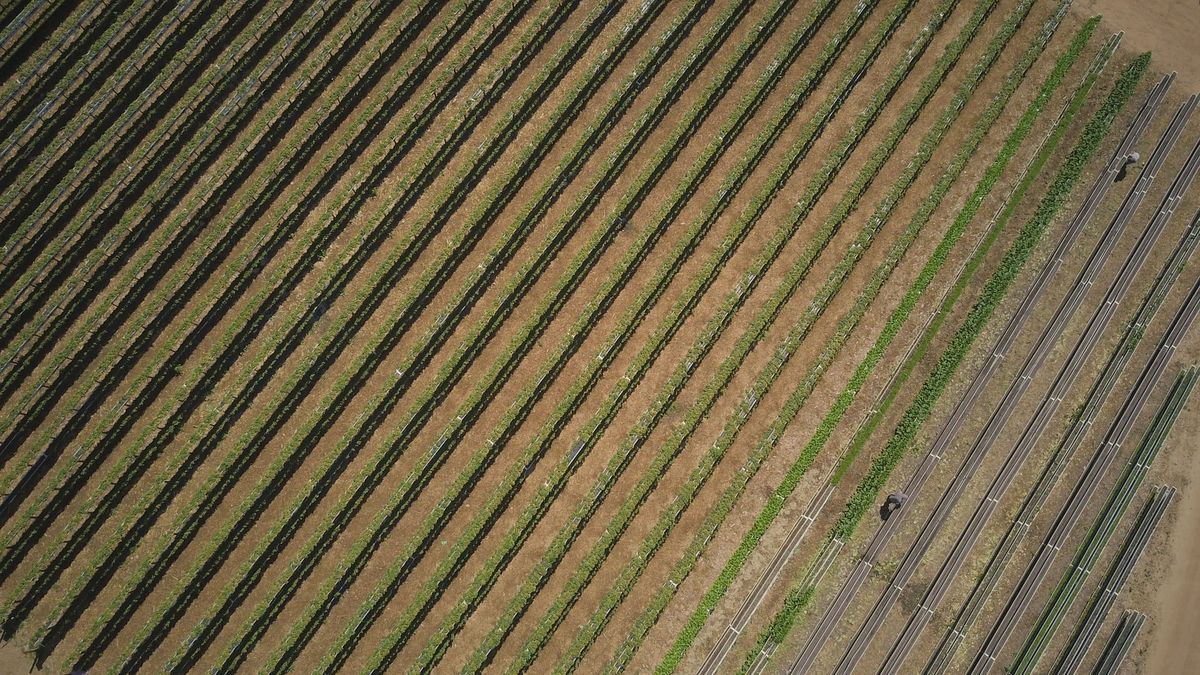
Naïo Technologies is back in business under new ownership with its product line narrowed to two machines, Oz and TED. The announcement came in November 2025, alongside a judicial restructuring that took the company through a French court process. For a grower running one of the other models, the practical question is the one that has always mattered: will the machine in the shed still be repairable, updatable and supported when the season turns. The company has now answered part of that in writing. The answers are narrower than the relaunch language, and the gaps are specific.
Which machines the company is now prioritising
Naïo's own announcement names Antoine Monville as CEO, overseeing engineering, innovation and production, and Matthias Carriere as COO, responsible for sales, customer support and the distributor network. The company says Mirova, Bpifrance and the Occitanie Region, through its ARIS fund, are backing the relaunch with a €6.4 million financing plan.
The action plan covers scaling up production capacity, expanding the European distribution network and consolidating R&D. Naïo says it targets operational balance by 2028, 100 robots produced per year and €11 million in annual revenue by 2030, and that the plan maintains 21 jobs and creates 10 new positions by 2030. Naïo also reports more than 350 robots in operation across five continents and a founding date of 2011 near Toulouse.
Future Farming reported, quoting Carriere, that Oz and TED are "our most sold and reliable robots at this time", and that Naïo's focus shifts toward developing those two flagship machines while all existing models remain available and continue to be sold through the established dealer network. AgFunderNews reported the same two-machine focus, describing Oz as a market-gardening assistant and TED as an autonomous straddler for vineyards.
The distinction that matters for owners is between the machines the company is investing development effort in and the wider historic fleet in the field. When Carriere says Oz and TED are the most sold and most reliable, he is describing a production and development strategy. It does not, on its own, say which machines are still being built, which are supported, and which sit outside both.
What Naïo has committed to in writing
In correspondence with Field Circuit, Carriere answered the installed-base questions directly. These are statements the company gave us, attributed to the COO, and they carry the weight of a company statement.
On software, Carriere said: "All those robots stay in the 2025 software version." For customers on those models, Naïo charges what Carriere calls a symbolic yearly subscription, in his words to "ensure maintain 2025 software version and datas storage".
On the servers, Carriere said: "Naïo handles all the servers in order to maintain activity continuation." Remote infrastructure operation sits with the manufacturer itself, by its own account, after the ownership change.
On the installed base, Carriere puts around 400 machines in the field, roughly 300 on vegetables and market gardens and 100 in vineyards. For the two models outside the Oz and TED focus, he cites around ten end users and says Naïo took over enough stock to manage that base.
On parts, Carriere said: "We can provide spare parts and we can help on repairing (we can do it or directly send relevant documentation)." On duration, he said Naïo took over enough parts and machines to manage spare parts to five years for those two models, and that he is "pretty sure more for Orio robot".
On the dealer route, Carriere said: "Depending on the situation, the dealer is the entry point and some of them are aware about how to manage that." On lead times, he said most spare parts are in stock but that during the busy season Naïo remains focused on Oz and TED, which is why he does not give a typical wait.
On autonomy features, Carriere said: "We stopped the Augmented Autonomy but most of those customers do not need it."
Five commitments, five different footings
The temptation is to read these answers as one support guarantee. They are five distinct commitments, and each rests on something different.
Software feature development has stopped for the legacy fleet, which stays on the 2025 version. Keeping that version running and storing data is what the symbolic subscription covers, in Carriere's account. Security patching is its own question: The correspondence from Carriere sets out five commitments and none of them is a patch cadence, with the subscription statement covering version maintenance and data storage only.
Cloud services depend on Naïo continuing to run its own servers, which Carriere says it does. That is an operating commitment, and the correspondence attaches no uptime or service-level figure to it.
Spare parts carry a stated stock and a stated horizon of five years for the two legacy models, with Carriere's own assessment of a longer period for Orio. A formal long-term support guarantee, with an end date and a remedy, is a different instrument, and the correspondence does not describe one.
Warranty obligations are the fifth item, and the correspondence does not set out warranty terms for the legacy machines. That is a question for the dealer and the original purchase paperwork.
An owner who hears "supported" should ask which of the five is meant. Frozen software kept running for a fee, on servers the manufacturer operates, with a parts stock sized to roughly ten end users, is a real answer. It stops short of feature development, a security programme and a formal support term, and the difference between those things is the difference between a machine that keeps working and a machine with a support contract.
What an owner should put in writing
The relaunch gives an owner reason to put five questions to the dealer, with answers tied to the specific serial number.
First, confirm which software version the machine is on and whether it is the 2025 version the company describes. Second, ask what the annual subscription covers and what it leaves out, particularly whether it includes anything beyond version maintenance and data storage. Third, ask what the route is if the remote services stop. Fourth, ask for the spare-parts position for the model in writing, including the five-year horizon and what happens after it. Fifth, ask which side of the Oz and TED focus the model sits on, because more than one of the answers above addresses only the machines outside it.
Those questions have answers that the dealer and the manufacturer can supply per serial number. An owner with written answers has closed the gap between a public relaunch and a machine in a shed. A verbal reassurance leaves it open.
The test the relaunch sets
The relaunch is a genuine restart: new leadership, a stated financing plan and a two-platform strategy. For the installed base, the company has given written answers on software, servers and the parts horizon, and those answers are the company's own account of its commitments.
The operating test is now specific. Take the five questions to the dealer and see whether the replies come back written, dated and tied to the serial number. That is what the relaunch sets for an owner, and it is the thing to watch when the next weeding window opens.