Review: frequent irrigation-water readings cannot on their own confirm pathogen safety
A critical review of connected water-quality monitoring finds frequent readings and machine-learning models useful for spotting changes, while physicochemical parameters cannot independently confirm a particular pathogen and low-cost sensors remain thinly validated against reference instruments.
A critical review published on researchsquare.com examines how IoT, AI and rapid sensors are being applied to irrigation-water quality monitoring ahead of harvest, and what they can and cannot establish for food-safety decisions.
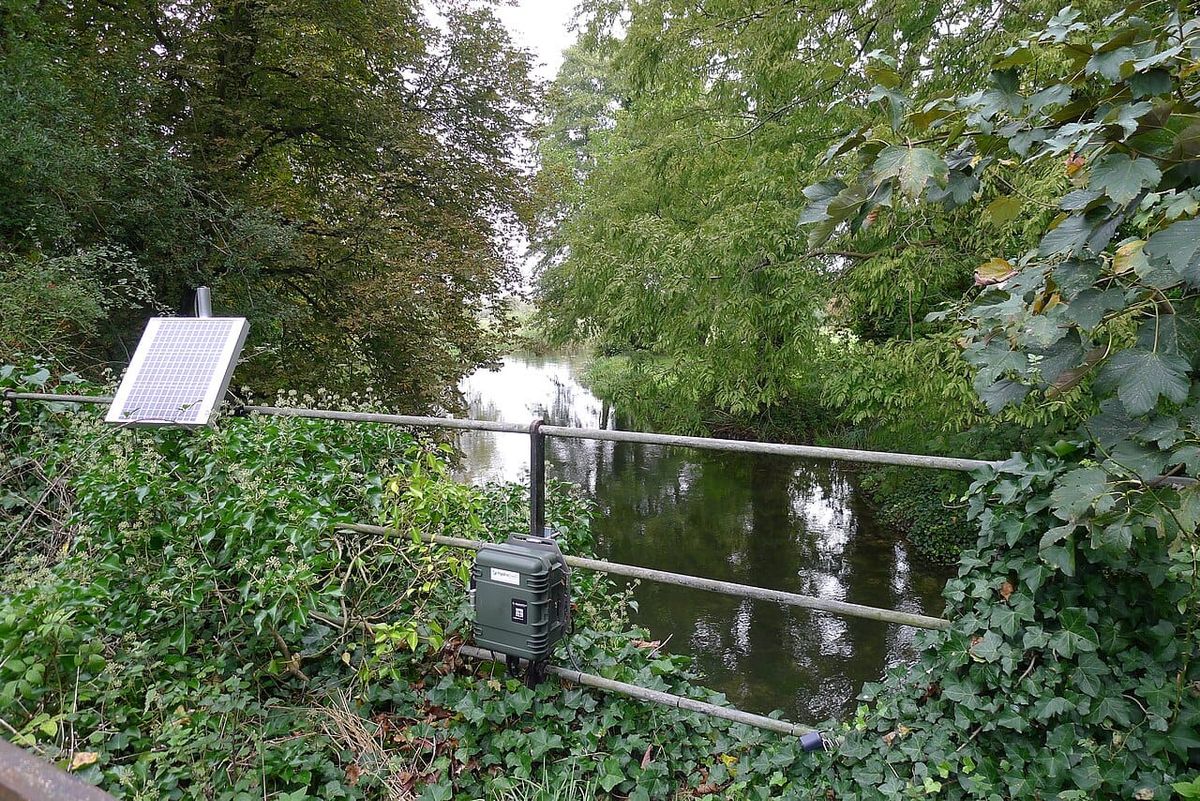
The review states that the Internet of Things makes it possible to monitor irrigation-water quality more frequently by connecting sensors to communication networks and digital platforms. Parameters such as pH, electrical conductivity, temperature, turbidity and dissolved oxygen can be measured and viewed remotely. The review reports that frequent readings do not always mean the measurements are accurate or useful for food-safety decisions, and that much depends on sensor reliability and whether the measured parameters are relevant to the problem.
The review notes that low-cost sensors offer a more affordable way to monitor water, especially where multiparameter equipment and repeated laboratory tests are expensive. It reports that de Camargo et al. (2023), in a systematic review of low-cost IoT water-quality sensors, found relatively few studies compared these devices with reference instruments, and that evidence on calibration, durability and performance under actual operating conditions was limited.
The review cites Slongo et al. (2024), who tested 19 low-cost sensors against a multiparameter reference probe and reported relative errors ranging from − 0.33% to 33.77%, although most were 5% or less. The pH and temperature sensors performed best. The review states that those tests were conducted under controlled conditions using real water samples, and that their findings do not necessarily show how well the sensors would perform during prolonged use in irrigation channels, reservoirs or other agricultural settings.
The review also sets out where connected monitoring fits. It reports that IoT sensors are most useful for establishing baseline water conditions, identifying unusual changes and guiding further investigation, and that readings should be checked against suitable reference instruments, with calibration and performance assessed over time using representative agricultural water samples. Where microbial contamination is a concern, the review states that sensor measurements need to be complemented by validated rapid detection methods or appropriate laboratory testing. It says this approach makes it possible to benefit from frequent monitoring without treating general water-quality readings as proof of microbiological safety.
Pathogen limits and data reliability
The review stresses that common physicochemical measurements cannot confirm whether pathogens such as Escherichia coli O157:H7 or Salmonella are present. Changes in turbidity, pH or electrical conductivity may signal unusual water conditions, but the review states that readings within the expected range do not guarantee the water is free from microbial contamination. Turbidity, pH and electrical conductivity can reveal changes in water conditions but cannot independently confirm the presence of a particular pathogen.
On rapid detection, the review cites Khodaparast et al. (2024), who highlighted sample preparation and nucleic-acid extraction as important steps in rapid molecular testing for waterborne pathogens, and Nnachi et al. (2022), who discussed challenges in developing reliable bacterial biosensors.
On the AI side, the review reports that Mokhtar et al. (2022) and Omeka et al. (2024a, 2024b) demonstrate statistical and machine-learning methods to assess water-quality parameters or irrigation suitability. It notes that El Bilali and Taleb (2024) emphasised data reliability and uncertainty, and that Mustapha et al. (2025) identified limited generalisability and localised datasets as continuing challenges. The review argues models need testing with independent data from different locations and seasons, and warns a model may report high overall accuracy yet still miss contaminated samples, especially when contamination events are uncommon. Classification studies should report sensitivity, specificity and false-negative rates alongside uncertainty and comparisons with appropriate reference methods.
Operating consequences
The review points to maintenance and integration burdens. It states that fouling, sediment build-up, measurement drift, temperature changes, power interruptions and communication failures may affect the quality or continuity of recorded data, and that problems with interoperability, standardisation and cybersecurity may also affect practical use of connected systems. Calibration, repairs and replacement parts add to the cost. The review reports that de Camargo et al. (2023) called for more long-term comparisons and field studies, and that Slongo et al. (2024) highlighted the need for clearer operating and maintenance guidance. It also cites Glória et al. (2020) on connected technologies for irrigation-water management and Nsoh et al. (2024) on IoT and machine learning in automated irrigation management.
Source: researchsquare.com, 30 October 2026.