Weenat Runs 15,000 Sensors on Sigfox 0G and 15,000 on LoRaWAN, on Hybrid Radios That Switch Between Them
Weenat reports over 30,000 agro-weather sensors on unlicensed LPWAN, split 15,000 on the Sigfox 0G Network and 15,000 on LoRaWAN. The sources say the sensors switch between networks according to the best availability; the failover timing, selection logic and dual-subscription economics stay unspecif
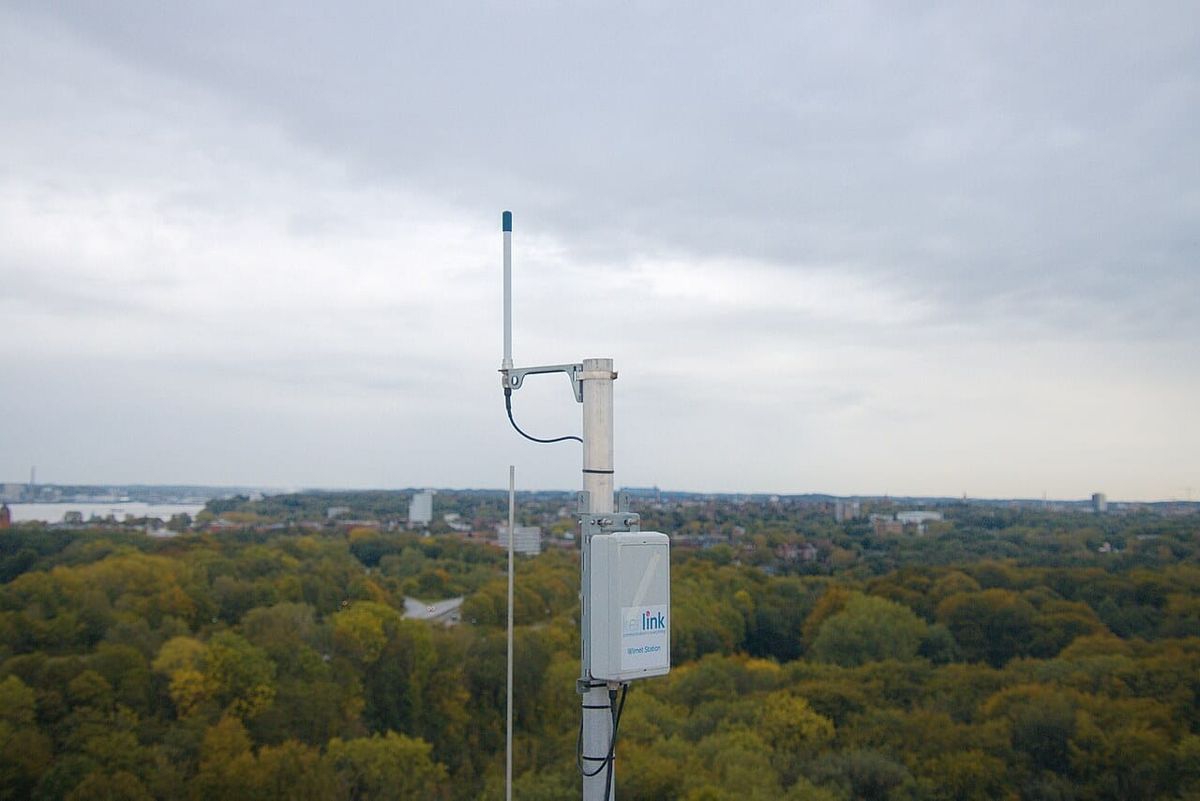
Weenat and its partners UnaBiz France and Orange Business report a fleet of more than 30,000 agro-weather sensors on unlicensed LPWAN, split 15,000 on the Sigfox 0G Network and 15,000 on LoRaWAN, in material the three parties published (LoRa Alliance member release; IoT M2M Council and 0G Association coverage). The counts are the parties' own.
That split is the interesting fact, because a grower does not buy a radio. A grower buys a reading that arrives before the decision closes: frost, drought stress, humidity-driven disease pressure, spray timing. A soil moisture number that lands nine hours late is trivia. So when a fleet runs on two stacks, the question is not which radio is better. It is who notices that one path has degraded, and whether they notice before the treatment window shuts.
Two stacks, two of everything
The release describes a fleet split across Sigfox 0G and LoRaWAN, and says Weenat designed hybrid IoT sensors that switch smoothly between LPWAN networks according to the best network availability across a farmer's property. What it does not set out is the failover timing, the selection logic in detail, or the dual-subscription economics behind the split. If devices cannot be re-provisioned across stacks, the estate carries two independent paths, two coverage assumptions and two failure domains.
Farmer-facing environmental telemetry at this scale is the stronger signal in the sources reviewed, but it is the vendor's claim, not a measured outcome. The device count and the farmer count are therefore interested-party assertions, and the evidence does not independently verify them or measure whether growers who took the service made better frost or disease calls than growers who did not.
What the sources establish
The LoRa Alliance member release says that Weenat designed hybrid IoT sensors to capture data that switch smoothly between LPWAN networks, according to the best network availability across a farmer's property. That is the clearest description of the dual-stack arrangement in the material, and it reads as a design statement for the fleet, not an accident. What the same material does not specify is the failover behaviour behind the switch: the timing, the triggers, and what happens to data continuity mid-transition. Nor does any source set out the commercial case: contract value, per-device economics, or any measurement of decision quality at the farm gate. The commercial claims are asserted at scale, not demonstrated.
The gap that changes a decision
The gap that changes a decision is failover detail. The sources describe sensors that switch between the two networks according to availability, but none of them specifies how quickly a device moves between stacks, what triggers the switch, or how identity and data continuity survive the transition. Everything downstream turns on those unknowns. If a device can be moved between stacks in the field, the second radio is a continuity asset and worth its maintenance. If it cannot, the split is a fixed estate decision made device by device at manufacture, and the operating burden is simply doubled.
Gateway coverage and roaming rules sit underneath that. If a device cannot be re-provisioned, a coverage hole on one stack cannot be closed by shifting the device to the other, which is the whole point of paying for the second radio. Roaming matters for any fleet that crosses national borders: without it, a device that leaves its home network stops reporting, and the failure looks exactly like a failed sensor. Both constraints reinforce the failover questions rather than replacing them.
None of the four sources reviewed for this article establishes Sigfox 0G or LoRaWAN availability, operation or adoption in South Africa. That is a limitation of this reading, not a finding about the networks: local availability stays an open question until a South African operator, network or regulator document is in hand.
What to watch
Watch for one document: an engineering note from Weenat, UnaBiz or Orange that sets out the failover timing and the selection logic between the two stacks, together with the dual-subscription economics. That would tell an operator copying the pattern whether the redundancy they are paying for behaves the way the design statement implies.