Precision-Ag Machine Learning Is Tabular Telemetry and Tree Ensembles
A newly published systematic review of 58 peer-reviewed studies argues that tree-based models on structured sensor data define precision-agriculture decision support.

The Review's Central Claim
Machine learning in precision agriculture has settled, for now, on structured tabular telemetry and ensemble methods. That is the contention of a systematic review covering 58 peer-reviewed studies, published in the International Journal of Creative and Open Research in Engineering and Management. The review argues that decision support systems have moved from static rule-based engines to data-driven frameworks built on IoT telemetry and supervised learning, and that farm-level deployments lean on structured tabular data: soil macronutrients (N, P, K), moisture dynamics, pH, and local microclimate variation.
The review is explicit that tree-based ensembles outperform kernel and linear baselines on these inputs. It is a useful architectural signal for anyone building or buying a farm analytics stack: the review's own conclusion points at well-structured sensor tables and ensemble methods as the working pattern.
What the Review Reports
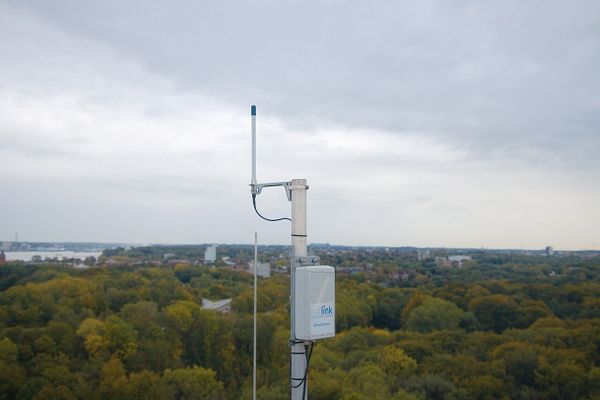
The review analyses multi-tier architectures spanning low-power field acquisition, edge preprocessing, and predictive inference (see the full review). It reports that tree-based ensembles, specifically Random Forest, XGBoost, and LightGBM, consistently outperform kernel methods and linear baselines. The review states that those ensembles achieve classification accuracies between 94.2% and 99.4% for crop suitability and fertilizer recommendation, figures the review presents as its own comparative benchmark results. It also reports sub-millisecond inference latencies, which the review describes as suitable for resource-constrained edge gateways. On small-sample regimes, the review reports that Support Vector Machines with RBF kernels offer competitive stability.
The accuracy range and the latency figure are the review's own assertions, published in its abstract, and should be read as benchmark performance under its stated conditions.
Where the Architecture Breaks Down
In the architectures the review examines, field gateways run inference at the edge. The review links that design to intermittent backhaul, and for an operator it translates into a specific maintenance and data-quality burden. The review flags calibration drift and missing-data imputation as open deployment challenges, and it treats clean tabular inputs as the condition its reported accuracy ranges depend on.
The review identifies these as open deployment challenges. It does not quantify their effect on model accuracy over a full season, and it does not identify which calibration intervals or imputation methods perform best under field conditions.
What the Review Leaves Open
The review names no South African deployments, operators, or trials, and it does not identify which crops, regions, or farm sizes its 58 studies cover. It reports no cost figures for edge gateway hardware or sensor maintenance, and its sub-millisecond latency figure carries no hardware platform or gateway specification.
For a South African grower or integrator, the review's value is architectural: it argues that the edge-inference-plus-tabular-telemetry pattern is where farmer-facing machine learning currently works. Its limits are equally architectural, and the operator who adopts the pattern will be the one to test it against local connectivity and calibration conditions.