From 2D images to 3D worlds: Bonsai's bet on an AI vision stack it says works across crops
Bonsai Robotics says it is working to break the single-task/cost trade-off in agricultural robotics with a vision-only autonomy stack. Its deployment and efficiency numbers remain company claims, and the across-crops, metric-scale and dust questions are the three tests a buyer should put to it.
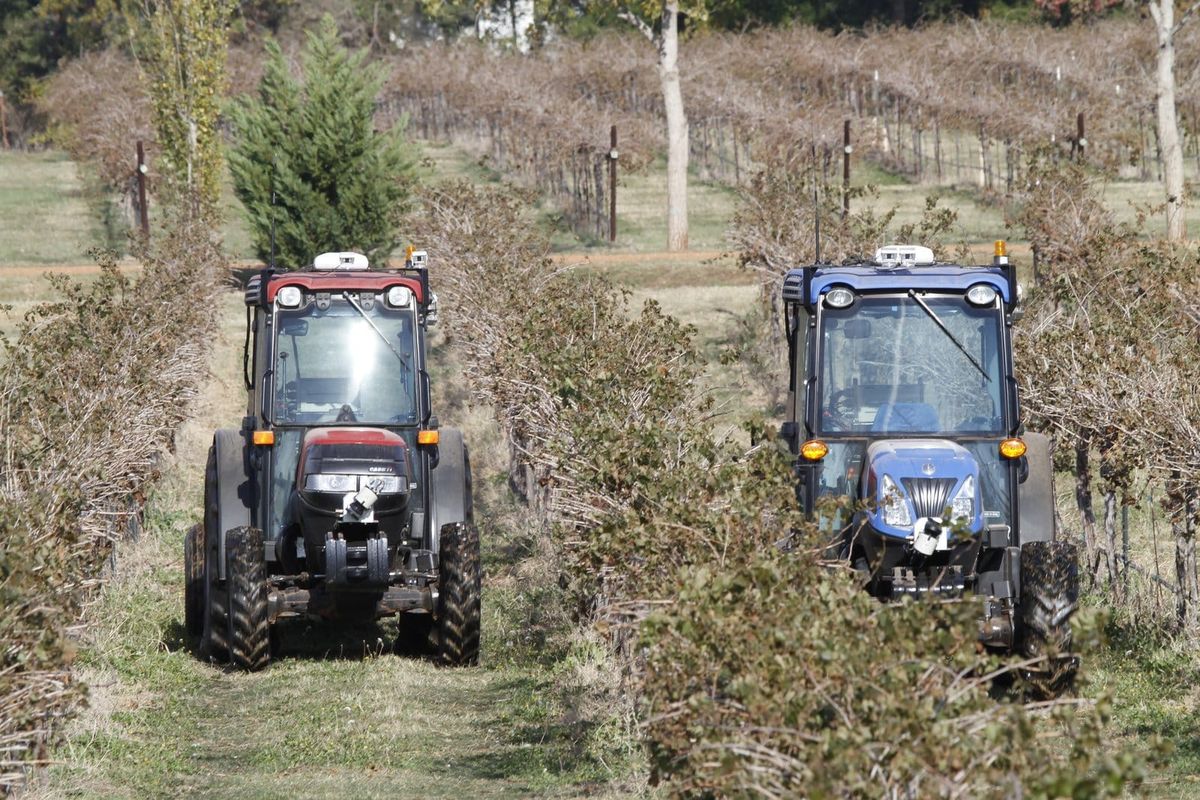
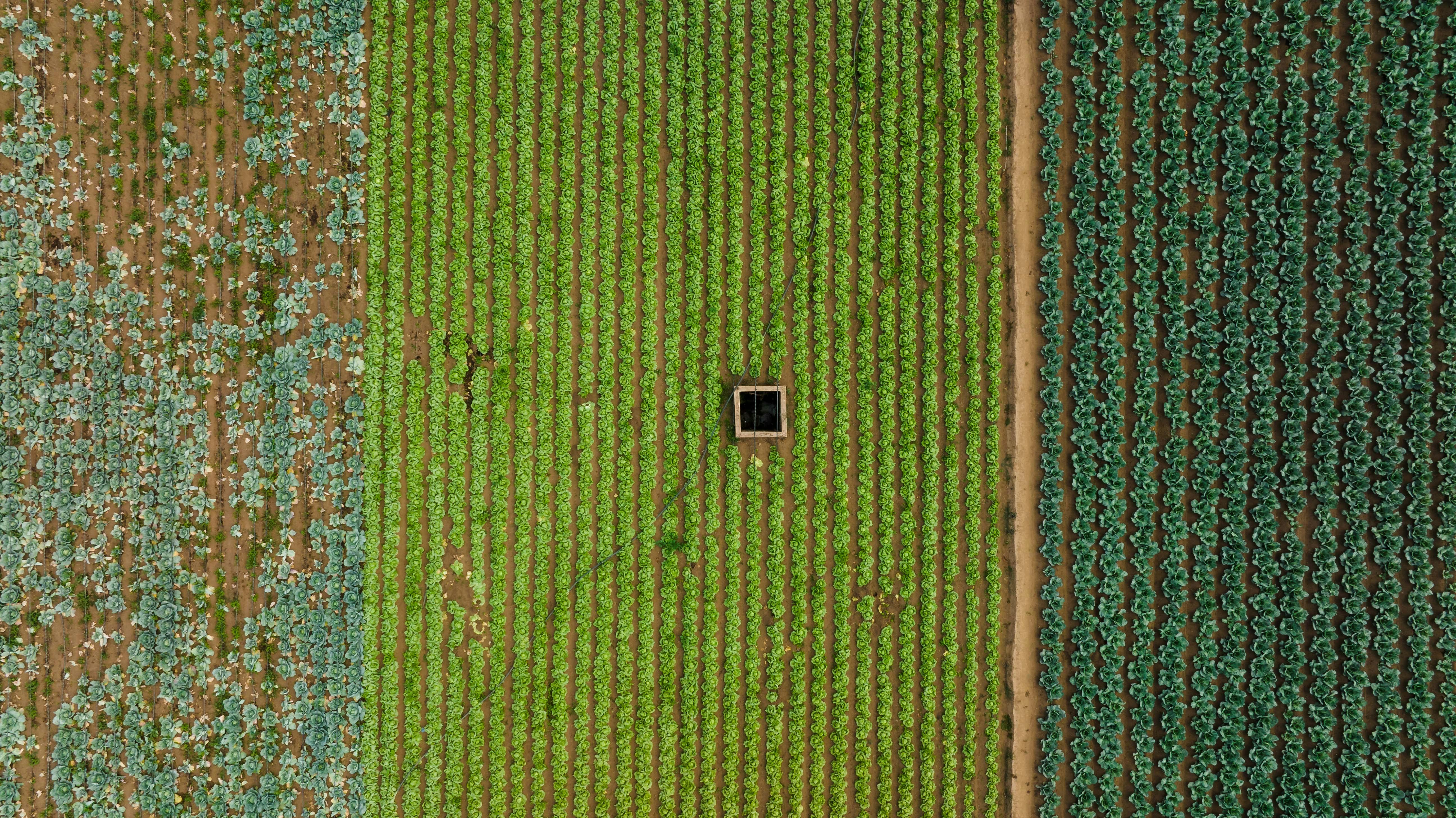
Bonsai Robotics, based in California, says it is working to break a long-standing trade-off in agricultural robotics: build a machine for one task or crop, or accept higher cost and complexity for flexibility. Its answer is a vision-based autonomy stack that converts 2D camera images into a scaled 3D understanding of the farm environment, with a single learned model intended to operate across orchards, vineyards, berries, and other speciality crops. Its deployment and efficiency numbers remain company claims, not verified performance.
The technical claim is that a transformer model learns depth from historical data rather than relying on rule-based approaches such as LiDAR or stereo matching, which gives it contextual understanding in conditions where LiDAR struggles, such as dust. The company says it has sold over 400 units in total, with data covering about one million acres. No South African validation data were cited.
One model across crops
Bonsai's product account is drawn primarily from an AgFunderNews interview with the company (Bonsai's 2D-to-3D approach, as reported). Co-founder and chief executive Tyler Niday argues that a single learned model can operate across crops without developers rewriting code for each application. The company says its training pipeline is internal and automated, with an NVIDIA model trained on the collected data.
The across-crops claim carries its own generalisation risk, and it is tested independently of the two technical questions that follow. A learned depth model is trained on the geometry it has seen: orchard rows, vineyard trellises and low berry beds differ in canopy density, structure and light. The evidence that would support the claim is a demonstration that the same model holds across those geometries without retuning, rather than a set of single-crop successes. That demonstration is not in the company's public material, so treat the across-crops claim as an untested question in its own right.
The metric-scale question
Can a model trained on historical camera data deliver depth at absolute scale, not just relative depth? The published literature on monocular depth estimation is explicit that deep learning models often predict relative depth without a consistent metric scale. Absolute metric scale is the harder sub-problem, and it requires something else to supply scale, such as training supervision, motion or known geometry (Survey on monocular metric depth estimation, arXiv 2025). Bonsai's own account does not state what supplies the scale in its model. Ask what supplies the scale. A model that is excellent at relative depth but weak at absolute scale will misjudge distances, and a machine that misjudges distances cannot be trusted near people, posts or headlands.
The dust claim deserves a similar test. Bonsai's positioning contrasts its camera approach with LiDAR, which the company says is limited in dust. A 2022 study in MDPI Sensors treats dust in LiDAR as a filtering problem, with methods for removing dust returns from point clouds rather than treating the sensor as simply blind (Dust filtering for LiDAR point clouds, MDPI Sensors 2022). The comparison to test is not camera-versus-LiDAR-blind. It is whether Bonsai's learned depth stays reliable in dust where a filtered LiDAR system might still hold, and whether a camera-only stack degrades gracefully when the view is obscured. Neither question is answered by the company's marketing material.
Own machines and retrofits
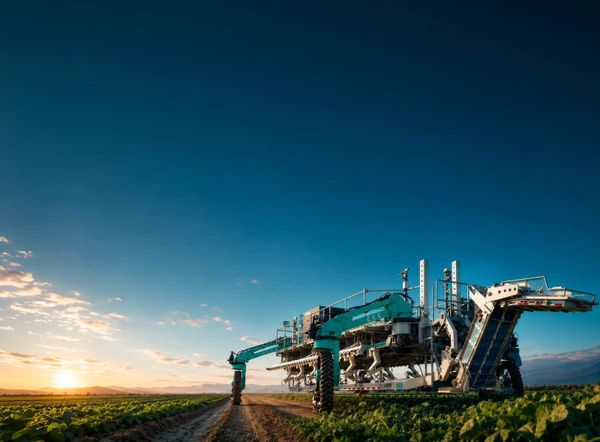
Bonsai says it continues to retrofit existing equipment but is also building its own machines following its acquisition of Farm-ng, including larger versions of the Amiga platform for spraying, hauling, and lifting. The retrofit-versus-own-machine mix matters for a buyer because the two paths carry different evidence. A retrofit rides on hardware the grower already owns and on the host machine's known behaviour; an own machine is where the company's autonomy stack is the whole product, so its across-crops, scale and dust claims are tested most directly there. That is where to look for the demonstration the rest of this article says is missing.
The economics
Bonsai argues its value lies not only in replacing labour but in lower machine cost and operating expense. Niday says one of its machines burns about three gallons of diesel per day instead of 30, and that revenue from retrofits and from its own machines is currently split roughly evenly. Both figures are company-reported. Read as a planning input rather than a verified claim, the diesel figure implies the payback case rests on fuel and labour savings. The machine price is not disclosed, and that is the gap a buyer should cost against local rates.
What it means for South Africa
No South African deployment or validation data appears in the available record, so no local claim is made here. Whether a learned-depth approach that is claimed to hold in dust transfers to local orchard and vineyard geometry and local crop canopies remains unverified, and the way to test it is concrete: does the model hold across crop geometries, what supplies the metric scale, and how does the stack degrade in dust and low light. Treat the company's deployment and efficiency numbers as a reason to investigate, not as verified performance.