The machine-vision question for South African packhouses: throughput and claims, not labour savings alone
Machine vision in a fresh-produce packhouse is a whole integrated line, not a camera, and it pays for itself through throughput and claims avoidance, not through labour savings alone. This is what a South African packhouse manager should weigh before buying.
A packhouse manager deciding whether to spend millions of rand on optical grading is usually told one of two things. Either the machine will replace the sorting table, or it will catch every bad fruit. The cases documented for this article suggest both framings miss the point. Vision sorting pays for itself through throughput and through the cost of the bad fruit that gets through, and it only makes sense above a real volume threshold.
What a vision line really is
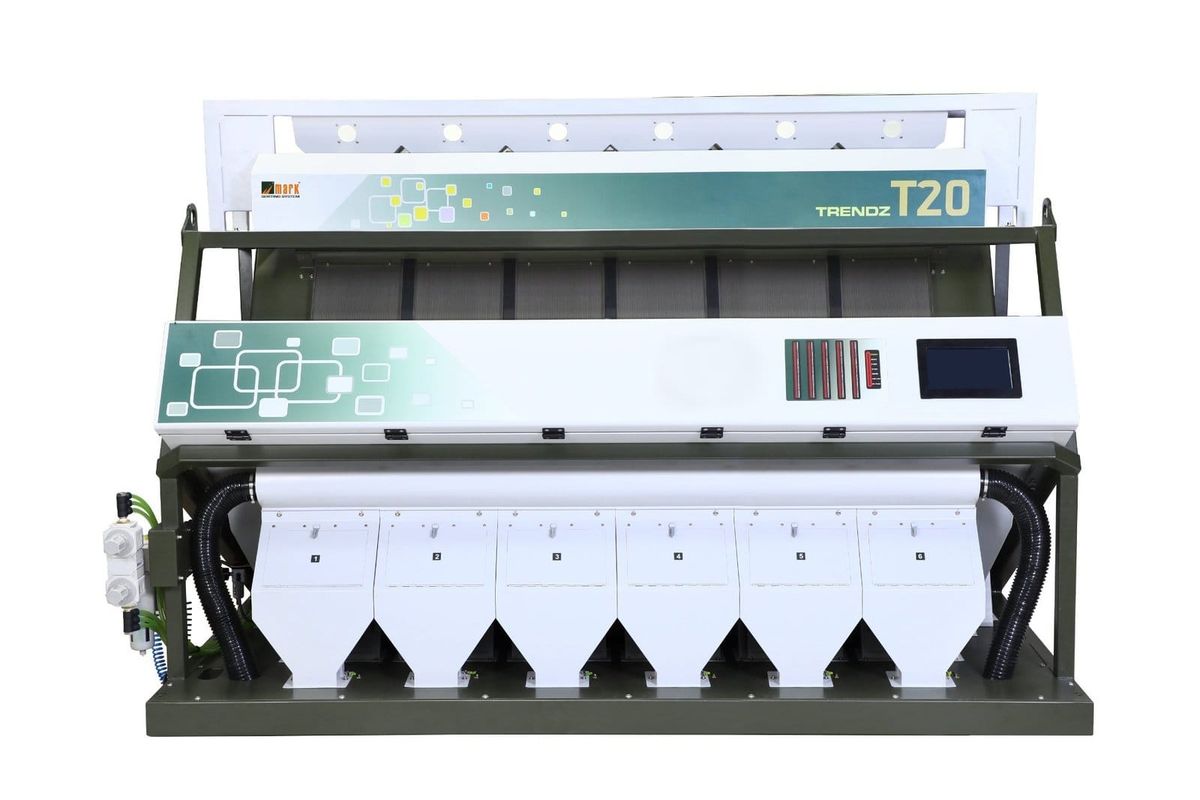
A modern grading line is an integrated system, and the camera is the middle of it, not the whole of it. Fruit is tipped and washed, singulated one by one, carried on cups or carriers so the whole surface can be imaged, measured at several vision stations, and released at programmable outputs that feed packing tables, robots or automatic packers.
In vendor and technical descriptions, the vision stations measure several things at once. Visible cameras size and grade for colour and shape. Infrared cameras look at external blemish. Near-infrared spectroscopy reads internal quality such as Brix, dry matter and internal defects. On citrus, vendor specifications describe UV imaging as catching the defect classes that matter for export.
Two South African installations with publicly available details, covered by the trade press and by vendor and packhouse material, show the scale involved. Sunriver Citrus in the Sundays River Valley processes around 84,000 tons a year across three packhouses, and has installed three TOMRA sorters since 2018, the third with a dynamic lane balancer that evens cup fill between lanes. Twypack, part of the ANB group near Nelspruit, built its packhouse to run 40 tons of soft citrus an hour around the clock. Every installation cited in this article is a public success story from a vendor or packhouse; no losing or marginal deployment is represented in the record.
The real economic driver
No independent, audited data set backs the two economic drivers below. Both come from the packhouses and vendors that built or bought the machinery, reported in trade and company material, so the honest reading is that the claimed benefits stay vendor- and packhouse-reported until a buyer verifies them on its own line.
At Twypack, a shift still runs 200 to 250 people in the packhouse, and even with that many people the line cannot pack 40 tons an hour. The shift ceiling is the constraint: manual sorting has a throughput ceiling that no amount of seasonal labour removes, so the case for automation starts where that ceiling binds.
The bad fruit that gets through carries its own cost. Two-a-Day, the Grabouw packhouse that is a shareholder of Tru-Cape Fruit Marketing, quotes its managing director, Roelf Pienaar, in its own case study. His point is that the new sorting cuts the claims Tru-Cape has to pay back for fruit delivered with internal browning, a defect that in the past could only be found by cutting fruit open. The Two-a-Day case argues that a single bad fruit reaching a buyer can trigger a destination claim, a rejected container or a damaged brand, each worth more than the one fruit. No third-party data in the public record confirms what those destination-claim costs actually run to. On that argument, a prudent rule is to weigh the cost of one bad fruit passing against the value of one good fruit rejected, and to treat the weights as the packhouse's own claims history, not as published figures.
The accuracy question nobody audits
No independent, third-party audit of packhouse vision accuracy exists in the public record. The quantitative claims are vendor claims: detection rates in the high nineties for specific citrus defects, external defects identified down to fractions of a square millimetre. Set too tight, the same line rejects sound export fruit, and the public record reviewed for this article contains no false-reject-rate figures either. Consistency is the stated reason Sunriver bought its sorters, to stop battling with light blemish sorting.
The maintenance reality
A vision line is not set and forgotten. Lighting has to be controlled, which is why the newer systems use LED: less heat and less dust, and a more stable image for the cameras. Contamination is a known weak point, which is why at least one major installation weighs fruit through the transfer unit rather than under-cup load cells, specifically to keep dirt and water from influencing the reading. Calibration is continuous, per cultivar, per season and per customer. The software adjusts its own thresholds against a running buffer of recent fruit, and new defect classes can be trained and pushed to the line remotely.
The South African picture
South Africa's export reality sharpens the case. The Citrus Growers Association cut the 2026 export forecast to 205.3 million cartons as weather changed fruit size and quality across the season. A line calibrated to last season's variance would need re-tuning this season, a consequence a manager can verify against its own grading data.
PPECB certifies export fruit at the end point under a regime recognised as equivalent to European Union inspection, which means less frequent checks at the port of import. The vision line exists to deliver the quality the PPECB inspector and the buyer's specification will check. The public record is silent on whether the grader's data feeds directly into that export documentation record, and how; it is an integration question to settle with the supplier.
The labour floor is now explicit: the national minimum wage for farm and packhouse workers is 30.23 rand an hour from March 2026. But the evidence says labour cost is only part of the calculation. The ceiling problem, that a sorting table physically cannot process export volume, is the automation driver, not the wage.
The decision framework
Whether machine vision pays in a specific packhouse is a calculation a manager runs against its own numbers.
First, set the throughput target. If peak demand exceeds what a manual table can physically pack, vision is the only answer that scales. Below that threshold the choice is a genuine calculation, and the public record does not settle it. A packhouse would need its own rand-per-hour labour cost against a per-ton-hour vision-line amortisation to decide whether cup sizing with manual grading is cheaper.
Second, decide what you sell. Export cartons with strict cosmetic and internal specifications justify the full sensor budget: colour, infrared and near-infrared. If the fruit goes to local or processing channels, the extra internal-quality spend does not pay.
Third, know which defect actually costs you, based on the vendor specifications reviewed for this article. External blemish needs simpler cameras. Internal defects such as browning, rot and bitter pit need the near-infrared and transmission units, and they are the ones that generate destination claims.
Fourth, weigh the asymmetry, but treat it as conditional on the packhouse's own claims history. The cost of a bad fruit that passes versus a good fruit rejected is not published; a packhouse's own destination-claim and reject records are the only numbers that settle it. In the Sunriver material, consistency and claims avoidance are stated as the reasons behind the purchase.
Fifth, get a real quote and plan the line as a multi-year asset. Public prices did not appear in the reviewed sources for this market. Sunriver's pattern is to add a sorter per packhouse over years rather than buy everything at once. Include the singulator, sizer, vision modules, exits, packing, installation, and the ongoing calibration and a skilled operator in the real cost.
The missing figures are direct ones from a South African integrator or packhouse manager: what an installed line actually costs per lane and per ton-hour, how often the cameras are cleaned and recalibrated, and whether anyone audits the grading against a cut test. None of the cases behind this article provides those numbers. They are the questions a packhouse manager should put to an integrator in writing before committing capital.